


Civil aviation and defence: A powerful strategic synergy
A few may know that Transport Canada’s roots can be traced back to military aviation. In fact, the Royal Canadian Airforce used to oversee civil flying until a Civil Aviation Branch of the Department of National Defence was created, becoming later in 1936 the Department of Transport. This may have reflected a bygone era in Canada where the interconnectivity between civil and military aviation was strong.
In fact, this mindset has endured, if not intensified, to this day in several aerospace nations like the U.S., where a constant technological flow exists between civil and defense aerospace. There are widely used technologies in civil aviation that originate from government-funded defence research initiatives. Global positioning system (GPS), composite materials, fly-by-wire technologies and head-up displays are only a few examples.
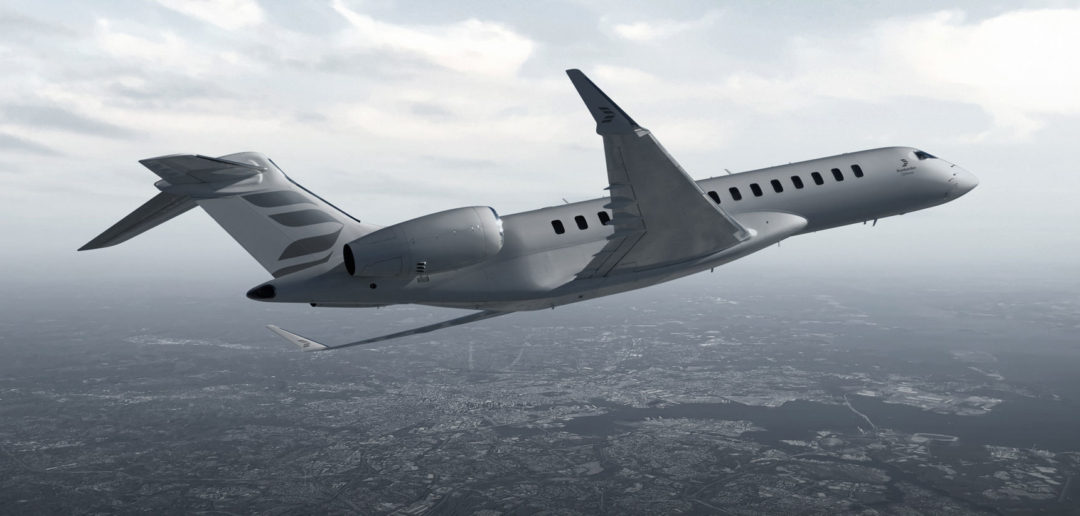
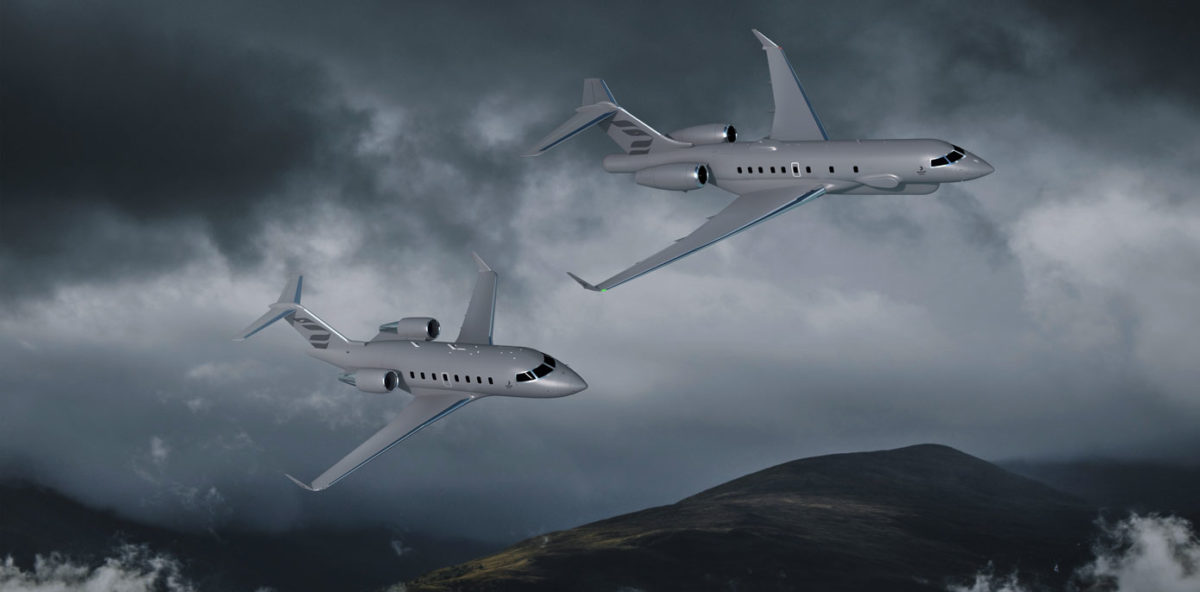
Bombardier’s current defence activities are built on this civil defence nexus model. Bombardier’s business jets and their outstanding performance make them attractive time and productivity machines, but also ideal platforms for defence applications, such as surveillance, early warning, deep sensing and electronic warfare. Bombardier is making them available to armed forces, along with its world-class civilian aircraft engineering and certification skills to make the proper aircraft modifications to fit the special systems.
A shared industrial base
The health of the broader civilian industry matters for our national security and defence industrial base. In the U.S., the notion of defining and protecting the defence industrial base (DIB) has permeated government policy making over several decades. The DIB is understood to encompass a wide variety of entities, including commercial firms, research centers and university laboratories.
The Canadian government has signaled that a defence industrial strategy is in the works. This is welcome and long overdue for Canada, given the rapidly shifting global geoeconomic and geopolitical landscape, and the rise of industrial policies around the world. As we consider this strategy, and in particular its implementation, it will key that civil aerospace be viewed as an integral part of Canada’s defence industrial base.

Aerospace in Canada and Montréal: A leading edge sector
Canada has a world-class aerospace ecosystem. In 2024, the industry contributed $34.2B to the Canadian GDP and 225,000 jobs to the Canadian economy. The sector’s R&D intensity is over 2.8 times higher than the manufacturing average. Bombardier alone supports approximately 50,000 jobs in Canada and generates annually $7.4B to the Canadian economy, all this from a very strong base in Greater Montreal where we have multiple facilities, a strong supply chain and 10,000 direct employees. Bombardier aircraft represent 5% of total Quebec’s export value.
Bombardier has just celebrated the entry into service of the Global 8000, the fastest civil aircraft since the Concorde. The Global 8000 aircraft was largely designed in Canada and is a testament to the tremendous capabilities Canada possesses in developing and manufacturing aircraft. This skillset could be leveraged to develop the next generation of platforms and capabilities that Canada needs for its national security.
Moreover, Canada has well-established strengths in pilot and maintenance training for civil and military operators around the world. The country also has the expertise to maintain and upgrade military aircraft, engines, avionics and airborne sensors. All these competencies are essential for any national security policy. They can form the backbone of a strategy to reinforce and expand sovereign capabilities and our ability to support allies.
Montreal undoubtedly is one of the preeminent global aerospace hubs, with the presence of a large number of leading aerospace companies, schools and research institutions, and headquarters of international organizations, such as the International Civil Aviation Organization. Much of our defence aerospace capabilities reside within the broader aviation industry.
The importance of public policies
As such, it is critical that we have supportive policies in place to reinforce and grow this industrial base. This involves implementing measures that enhance competitiveness, increasing investment in Transport Canada’s aeronautical product certification resources, and advancing export and talent attraction policies that drive growth and broaden the domestic market.
Canada has a long and rich aviation history, and this history is deeply intertwined with our military. It is time to recognize and reenergize these strategic intersections for the betterment of our industry, security, innovation and, ultimately, our economy and national interests.

Newsletter
Don't miss out
Sign up to receive the latest news from Montréal International.